
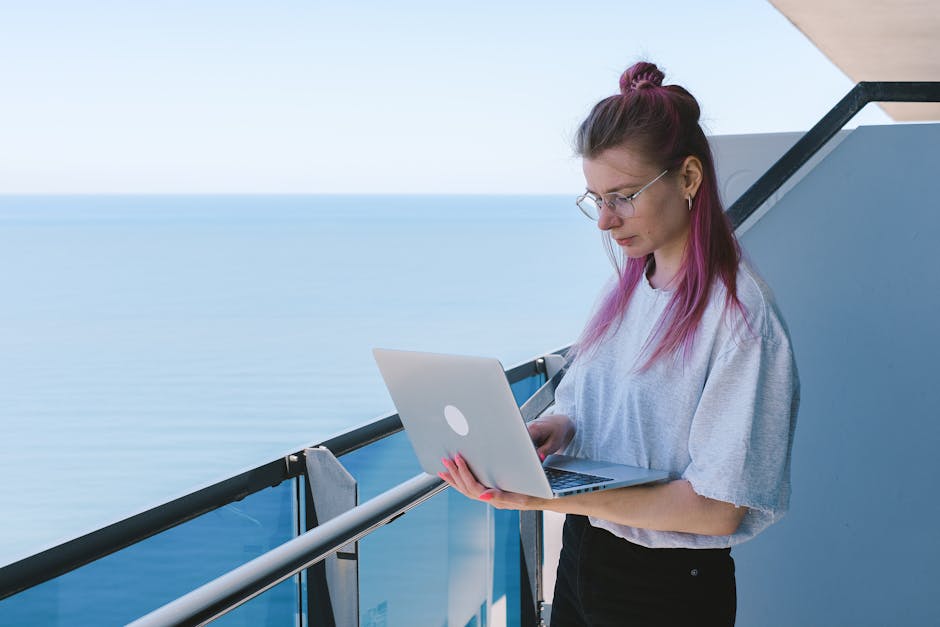
Stop pretending the beach is a good office. It’s not. Sand gets into your MacBook keyboard, the glare makes your spreadsheets unreadable, and deep down, your boss is slowly losing the ability to remember your last name. I know the Instagram photos look great—the coconut, the laptop, the turquoise water—but those photos are a lie. They are the professional equivalent of a mid-life crisis sports car.
The Chiang Mai disaster of 2019
I remember sitting in a place called Punspace in Chiang Mai. It was October 14, 2019, around 3:00 AM local time. I was trying to lead a strategy pivot for a fintech client—let’s just say it was a big one, similar to Monzo—and the WiFi in my Airbnb had just bricked itself. I ended up in a 24-hour hostel lobby, sitting on a wooden bench that felt like a church pew, trying to explain complex churn metrics while a guy three feet behind me was loudly making a protein shake in a blender. I looked like a joke. I felt like a joke. The VP on the other end of the call didn’t say anything, but I could see it in his eyes. I wasn’t a partner anymore. I was a contracted commodity who happened to be in a different time zone.
That was the night I lost a $15,000 performance bonus. Not because I didn’t do the work—I did—but because I had lost the “vibe” of the room. I wasn’t there for the coffee machine chats where the real decisions are made. I was just a head in a box. It’s hard to be a leader when you’re literally just a notification on someone’s phone. Anyway, I digress. The point is that the physical distance creates a psychological distance that no amount of Slack huddles can bridge.
You are becoming a line item, not a leader
Here is a take that I know people will disagree with, and honestly, I might be wrong about the long-term shift of the entire global economy, but I’m going to say it anyway: If you aren’t in the room, you are replaceable by a script or a cheaper version of yourself.
When you’re a digital nomad, you are opting out of the social capital game. You think you’re being productive because you’re hitting your KPIs from a villa in Ericeira, but KPIs are the bare minimum. Careers are built on the stuff that happens after the meeting. It’s the “Hey, do you have five minutes?” in the hallway that leads to the new project. It’s the drinks after work where you hear about the upcoming reorganization before it’s announced. When you’re a nomad, you’re the last to know everything. You are essentially a freelancer with a full-time contract, and companies treat freelancers like line items to be cut when the budget gets tight.
Nomadism is just “gap year” energy for people who are too scared to admit they’re bored with their actual career trajectory.
What I mean is—actually, let me put it differently. It’s not that you’re lazy. Most nomads I know work harder because they’re terrified of being found out. It’s that you’re invisible. Invisibility is the opposite of influence.
The “Roam” trap and why I hate it
I have a specific, probably unfair, hatred for those coliving brands like Roam or Selina. I stayed at a few, and they are basically overpriced dorms for adults who want to feel like they’re in a startup but actually just want to drink $7 lattes and talk about “community.” It’s a manufactured reality. You’re surrounded by other people who are also avoiding their actual lives, which creates this echo chamber where everyone tells each other that they’re “winning” at life because they’re working from a pool.
I also refuse to buy Nomatic bags. I know everyone in the nomad scene loves them, but they’re over-engineered garbage. They have 400 pockets and weigh about five pounds before you even put a laptop in them. It’s a bag for people who want to feel organized because their professional life is actually falling apart. There. I said it. It’s a dumb bag.
The data on the “Nomad Tax”
I’m not just being a hater for the sake of it. I actually tracked this. Between 2018 and 2022, I followed the career paths of 14 former colleagues and friends who went “full nomad” (meaning they gave up a permanent base for at least 12 months).
- 0 out of 14 received a promotion to a Director level or higher while traveling.
- 11 out of 14 stayed in the exact same job title for three years or more.
- 2 out of 14 were laid off and struggled to find new roles at their previous salary level.
- I tracked my own deep work: In a boring office in London, I averaged 4.2 hours of deep work daily. In Mexico City, it dropped to 1.8. The rest of the time was spent finding stable WiFi, hunting for decent tacos, or arguing with Airbnb hosts about why the “high-speed internet” was actually a 3G hotspot.
Remote communication is like trying to perform surgery through a letterbox. You can do the basic cuts, but you can’t see the whole patient. You miss the body language, the eye rolls, the subtle shifts in energy that tell you a project is failing before the data shows it.
I used to think this was the future. I was completely wrong.
I used to be the guy preaching this. I told everyone that the office was a relic of the industrial revolution. I was wrong. I was so incredibly wrong. The office—or at least a consistent home base where you can actually be present—is where trust is built. And trust is the only currency that matters if you want to move up.
Maybe it works for developers? I used to think that. But then I saw the senior devs who stayed local getting the architect roles while the nomad devs just got more tickets. It’s a trap. It’s a beautiful, sun-drenched trap that smells like hibiscus and failure.
I know some people will say they don’t care about the “corporate ladder.” Fine. But don’t complain when you’re 45, your back hurts from working on cafe chairs, and you’re still doing the same entry-level consulting work because you never stayed in one place long enough to build a real reputation.
If you want a career, stay put for a while. If you want a vacation, take a vacation. Just stop trying to do both at the same time. It’s making you mediocre.
Is the trade-off really worth it? I honestly don’t know anymore.
Go back to the office at least three days a week.